
Newsroom
Leasing, Without the Jargon: What Actually Happens When You Lease an Asset?
For a business considering leasing for the first time, the natural question is simple: if you are using an asset every day, what are you…
Newsroom
You Need the Asset. Do You Need to Own It? Should a growing business buy, borrow or lease its equipment? Understand equipment leasing, financing and the impact each option can have on cash flow and asset ownership.
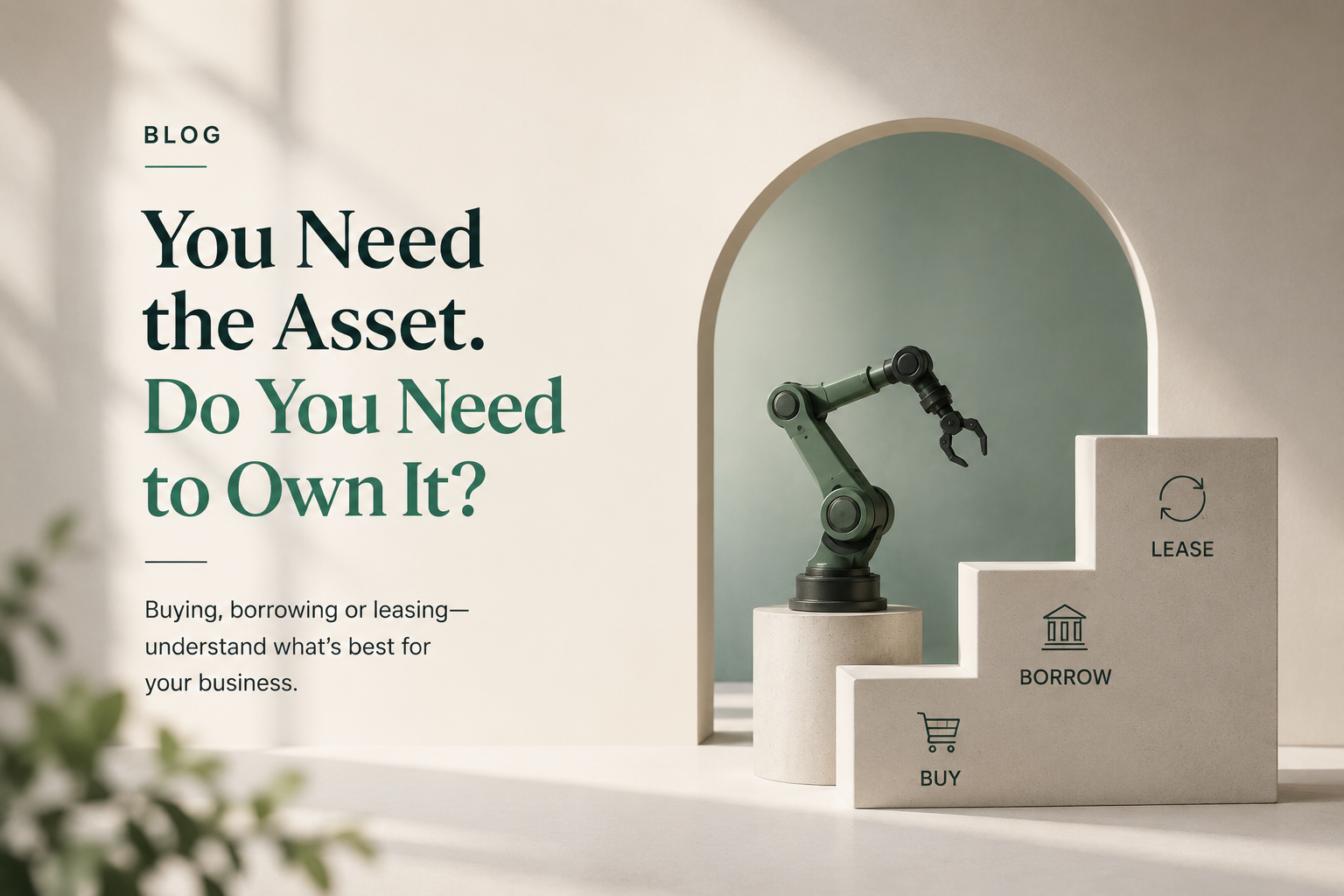
You Need the Asset. Do You Need to Own It?
For a growing business, acquiring the right equipment is rarely just a procurement decision.
A manufacturer adding a new production line, a diagnostic centre investing in advanced equipment, a hotel refreshing its interiors, or an MSME upgrading its technology is making a larger financial decision:
Where should capital be deployed, and for how long?
Traditionally, there are two familiar answers.
Buy the asset.
Pay for it upfront, own it, and carry the equipment through its useful life.
Borrow to buy it.
Use a bank or NBFC loan, spread the cost over time, and take on the corresponding debt and ownership responsibilities.
But there is a third way to access the same asset:
Lease it.
Equipment leasing allows a business to use an asset for an agreed period in return for periodic rentals, with ownership, risk and responsibilities determined by the structure of the lease.
The asset may be exactly the same.
The financial implications need not be.
Mintifi's internal comparison of buying, borrowing and leasing looks at the decision through six lenses: upfront cash, ownership, balance-sheet impact, tax treatment, working capital and what happens when the asset becomes outdated.
That last point is particularly important.
An asset creates value because it performs a function. But businesses do not always need to own that asset forever. A machine may become obsolete. Technology may need to be upgraded. Equipment may no longer match the business's requirements.
So the more useful question may not be:
“How do we buy this asset?”
It may be:
“What is the most effective way for our business to use this asset?”
That is the starting point for understanding leasing finance and equipment financing.
And leasing is not a single structure. Who owns the asset? Who maintains it? Who carries residual-value and obsolescence risk? What happens at the end of the term?
Those answers depend on how the lease is structured.
In the next chapter, we put the three choices side by side, and follow what happens to the same machine, the same business, and the capital behind it. Buy. Borrow. Lease. Same Asset. Three Very Different Financial Journeys.
Newsroom
For a business considering leasing for the first time, the natural question is simple: if you are using an asset every day, what are you…
Newsroom
Leasing is not simply about replacing a purchase with a monthly payment. For a business decision-maker, the real consideration is what…
Newsroom
The question is not simply what it costs to acquire an asset, but what that decision means for the business’s capital and future…